A Rainy Day in Hong Kong With Kids: What Actually Works
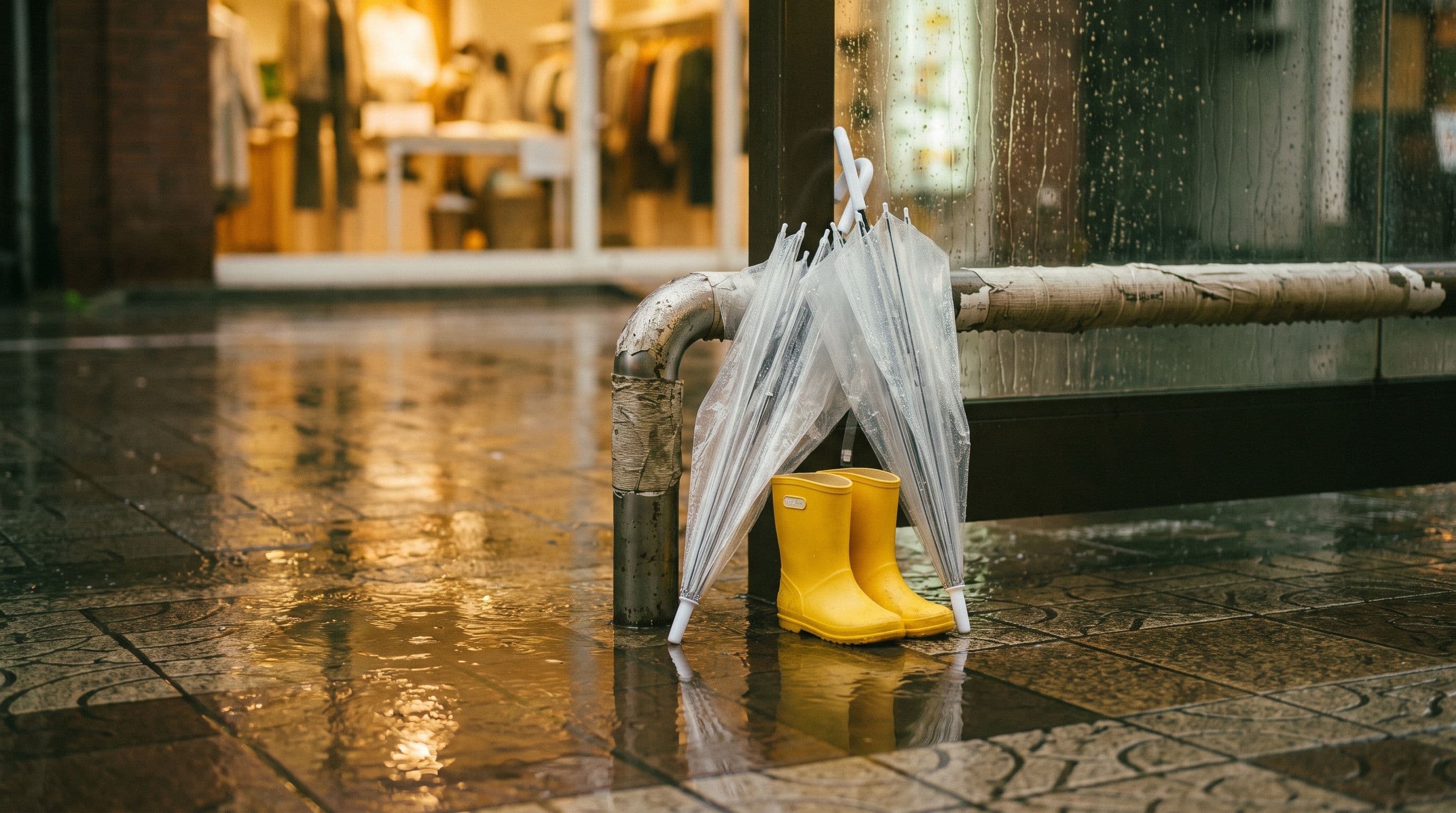
A rainy day in Hong Kong with kids is not a lost day, and it is usually not even a rearranged one. The city is built to be moved through under cover, and the two things that work best in bad weather, museums and indoor play, are cheap, air-conditioned and easy to reach by MTR. What changes your plan is not whether it is raining. It is how hard.
So before you cancel anything, find out what colour the rain is.
First, check the warning colour
The Hong Kong Observatory runs a three-tier rainstorm system, and the thresholds are precise. Amber means heavy rain exceeding 30 millimetres in an hour has fallen or is expected. Red means over 50 millimetres in an hour. Black means over 70 millimetres in an hour, and the official advice under black is blunt: stay indoors or take shelter in a safe place until the heavy rain has passed.
Amber is the one you will most likely meet, and amber is a normal day with wet shoes. Red is when the streets start to feel unpleasant with a pushchair. Black is rare, and it is the only one that should make you tear up the day's plan. Attractions publish their own closure rules keyed to these same colours, so the colour is the most useful thing to check before you leave the hotel.
The museums that do the heavy lifting, and two of them are nearly free
Three of the best sit close together in Tsim Sha Tsui.
The Hong Kong Museum of History is free. Not discounted, free, including the "Hong Kong Story" permanent exhibition and its interactive zones. It opens 10am to 6pm Monday and Wednesday to Friday, 10am to 7pm on Saturdays, Sundays and public holidays, and it closes on Tuesdays.
The Hong Kong Science Museum, at 2 Science Museum Road in Tsim Sha Tsui East, is four floors of hands-on exhibits, and it costs almost nothing: HK$20 standard, HK$10 concessionary, free for full-time students, and free for children under 4 accompanied by a ticket-holding adult. Everybody gets in free on Wednesdays. It runs 10am to 7pm Monday to Wednesday and Friday, 10am to 9pm at weekends and on public holidays, and it closes on Thursdays.
The Hong Kong Space Museum at 10 Salisbury Road charges HK$10 for the exhibition halls and HK$5 concessionary, again free on Wednesdays and free for under-4s with a ticketed adult. Its Space Theatre shows are ticketed separately at HK$30 or HK$40, and children under 3 are not admitted to those, which is worth knowing before you queue with a toddler.
The trap is the closing days. The Science Museum shuts on Thursdays; the Museum of History and the Space Museum shut on Tuesdays. Check the day, not just the hours.
Rainy day Hong Kong with kids: what works at which age
Museums stop working somewhere below school age, and that is where Hong Kong's indoor play scene earns its keep.
- Six months to six years: Wise Kids Playroom, with sites in Central and Causeway Bay, is built for exactly this band.
- Under six, themed: Playroo in Fortress Hill is designed for under-6s and has a train ride.
- Up to eight: Pamela Peck Discovery Space in Aberdeen runs free weekend sessions and accompanied weekday playgroups.
- Older kids who need to burn it off: Ryze in Quarry Bay is a 20,000 square foot trampoline park with more than 40 trampolines, foam pits and a ninja obstacle course, and tots under two jump free. Super Sports Park in Tai Kok Tsui takes all ages and adds giant slides, courts and climbing walls.
- LEGO-obsessed: LEGOLAND Discovery Centre in Tsim Sha Tsui pairs build zones with 4D films.
If you are travelling with a baby rather than a walker, the calculus is different again, and we have covered Hong Kong with a baby or infant separately.
Do the theme parks still run in the rain?
Mostly, yes, and this surprises people. Hong Kong Disneyland's own weather policy says that under an amber or red rainstorm warning, "the park remains open, but some outdoor attractions and entertainment may be suspended, adjusted or cancelled." Even under a black rainstorm the park stays open with limited offerings, though it may delay opening if the signal is up beforehand. Only typhoon signal 8 or above closes it outright. If the park does close during your visit, Disneyland lets you use your original ticket to come back within six months.
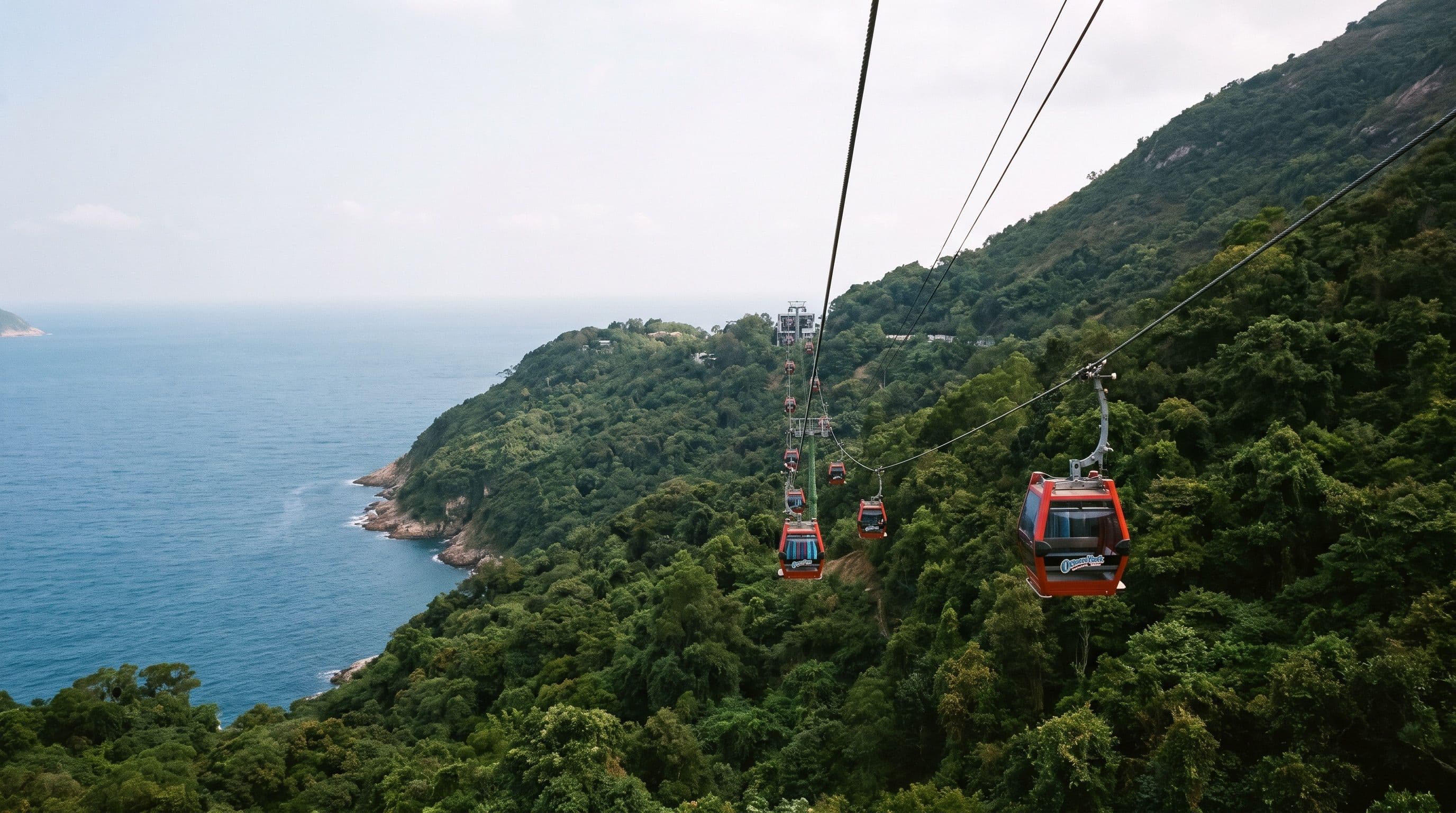
Ocean Park reads the same way: its weather page states that if the black rainstorm signal goes up during park hours, the park remains open with limited service. It also warns that certain rides and shows may be suspended for safety, and that the cable car system may be suspended depending on wind speed. That matters more than it sounds, because when cable car service has been suspended in the past the park has closed its upper section.
The practical answer: if you already hold tickets and the warning is amber, go, and start with Ocean Park's Grand Aquarium or Disneyland's indoor attractions while the rain does its worst. If your children are small enough that queuing in a poncho is a non-starter, our Disneyland with toddlers guide covers which parts stay dry.
Moving between things without getting soaked
Use the MTR and the mall network attached to it. Most stations connect to the buildings above them through covered walkways, so a museum, lunch and an indoor playground can be strung together with very little sky. Harbour City in Tsim Sha Tsui, Times Square in Causeway Bay and K11 Musea all absorb hours with children without anyone getting wet.
Two rainy-day rides are worth doing for their own sake. The ding ding tram is enclosed, cheap and slow, and the top deck in the rain is a genuinely good way to see the city. The Star Ferry is reachable by covered walkway from IFC in Central, so you can cross the harbour wet-weather-adjacent rather than wet.
Quick answers
What can you actually do on a rainy day in Hong Kong with kids? Free or near-free museums in Tsim Sha Tsui (History, Science, Space), indoor play centres graded by age, the mall network above the MTR, and the theme parks, which stay open in most rain.
What is the rainiest month in Hong Kong? The Observatory puts about 80 percent of the annual rainfall between May and September, with June and August typically the wettest. January and December are the driest.
Which month should you avoid? If rain is your main worry, June to September carries both the heaviest rainfall and the tropical cyclone risk, and the Observatory singles out July and September as particularly prone to it.
Do Hong Kong attractions close when it rains? Indoor ones generally do not. Museums and both theme parks tie their closure rules to the rainstorm colours and typhoon signals rather than to rain in general, and only the top of those scales closes anything.
Is one rainy day enough to derail a family trip? No, but two is annoying, which is part of the argument for giving a family trip to Hong Kong enough days to absorb one.
Planning the rest of your trip? See our guide to Hong Kong with Teenagers: What Actually Holds Their Attention.